
Category Archives: Ferrous Metal

  1. Retired Tech Hardware Is a Goldmine Just Waiting to be Mined

    Retired Tech Hardware Is a Goldmine Just Waiting to be Mined

    Did you know that there is always a new piece of technology being released as you read this article? Smartphones are replaced yearly while servers and computers are tossed after two or three years of processing wear and tear. Every iPhone, rackmount server, and circuit board is a collection of valuable resources just waiting to be harvested.

    Think about all of those tech devices that end up in a landfill. Not only does that create an environmental hazard but lost opportunity. What if there was a way to extract all of that copper wire, aluminum, gold, and silicon before retirement?

    Recycling metals from old office computers, cell phones, and construction equipment doesn’t just benefit the environment – it’s good for business.

    Why does the tech industry depend on responsible metal recovery?

    Your smartphone, PC, and home stereo contain more nonferrous metals and precious metals than you may realize. It takes an immense amount of energy and habitat disruption to mine precious metals and metal ores from the ground. Transporting raw materials also adds to your carbon footprint. Pre-consumer recycling like harvesting gold from used tech is one of the easiest ways to drastically reduce your business’s impact on the planet.

    Every router, modem, and server you field upgrade contains copper, aluminum, silicon, gold, and palladium. Facilitating a pipeline to your nearest metals recycler not only prevents these valuable metals from ending up in a landfill but creates an alternative revenue stream when your hardware inevitably reaches retirement age.

    Valuable metals found in tech hardware

    If you have a large batch of old office computers or maybe even a data center closure, you should know what’s inside before you decide to scrap it.

    • Motherboards/Circuit boards | These are the “killer apps” of scrap metal. Thin layers of gold, silver, and copper await inside.
    • Power supply units (PSUs) | Another big one that contains pounds of copper wire and aluminum heat sinks.
    • Hard drive casing | Often made from high-quality cast aluminum, these can easily be separated and sent for recycling.
    • Cabling | Copper wire is everywhere in the tech industry. Everything from your Cat6 Ethernet cables to large power cables is copper.

    Environmental cost of tech metals ending up in landfills

    Heavy metals being leached into the groundwater isn’t the only reason you should consider properly recycling electronics. Did you know that it takes 95% less energy to produce a ton of aluminum from scrap than from raw materials?

    We live in an age where “going green” isn’t just a suggestion. By selling your shredded circuit boards, aluminum scaffolding, and copper wire, you are doing your part to keep these materials in a closed-loop system. It can help your bottom line, but it also encourages more sustainable mining practices and saves space in our landfills.

    Let’s face it, there is an awful lot of aluminum lurking in the tech industry. The rare earth elements used in electric motors and batteries are some of the hardest materials to mine. Recycling what we have takes less energy and protects fragile ecosystems all over the world.

    Step-by-Step instructions for breaking down tech for scrap

    When dealing with any volume of electronics, it’s best to have a system. Taking the time to prepare your metals for recycling will save you time when you drop it off and will earn you more money.

    1. Purge all data | Hard drives don’t need to be tossed in with the aluminum frame. Make sure all of your storage devices have been wiped or physically destroyed. Computers are full of sensitive information. While the gray box a hard drive is made from is pure gold to a scrap yard, that data is poisonous.
    2. Break it down | Grab your wire cutters and screwdriver. It only takes a few minutes to completely take apart a computer or piece of equipment. Separate that aluminum heat sink from the computer motherboard and save yourself some money. Items that are considered “bare metal” earn higher rates when they arrive at the scrap yard.
    3. Sort your metals | Grab a fridge magnet. If it sticks to your metal scrap then it’s considered ferrous and mainly composed of steel. Anything not attracted to a magnet is called “non-ferrous” and contains most of the precious metals found in circuit boards, wiring, and processors.
    4. Bundle your wire | Got a bundle of thick copper power cables? Strip the insulation and resell it yourself! Most yards will pay top dollar for bulk copper wire that has been stripped.

    If you’re not set up to do that yet, don’t worry. Many scrap yards accept insulated wire and still pay a handsome rate for it.

    Quiz | How much do you know about tech scrap?

    1. Where is most of the gold found in a computer?
    2. True or False? Aluminum heat sinks should not be removed from circuit boards.
    3. True or False? Computers use aluminum cabling exclusively.

    (On the motherboard / CPU. False; they should always be separated when possible. False, copper.)

    Resolve your pain points with construction tech recycling

    If you manage a warehouse or large facility with rolling computer upgrades, it can feel like your scrap metal bins are overflowing. Nobody has the time to meticulously sort aluminum from copper wire. However, keeping all of your scrap metals together both decreases the value of your payload and creates unnecessary clutter.

    Imagine if you will the “perfect” recycling yard. When you call to schedule a pickup, they understand your industry, have accessible weighing services, and cater their pricing to your needs as a professional customer.

    Enter Action Metals. 

    Tips for increasing profits when recycling tech metal

    Here are some quick tips to keep in mind when you’re harvesting copper wire and sorting through circuit boards.

    • Keep your CPUs separate | Believe it or not, CPUs are graded differently. Hang onto those old Intel processors in a separate bin.
    • Batteries | While these need to be disposed of properly, many laptops contain NICADS batteries that should be removed from the unit before processing.
    • Look for the Gold | Grab your jeweler’s glasses and scope out that Ethernet cable. Many components in your tech use gold plating; find it, and you’ll find profit.

    Making money from tech metal recycling 

    Every time the price of RAM goes up, your ability to profit from recycled metals decreases. Think of your tech scrap as a revenue stream that offsets the cost of new equipment. By implementing a dynamic storage and sorting system in your office or warehouse, you can change the way your business thinks about “waste”.

    Transforming trash into cash isn’t just good for the planet. It’s how businesses will succeed in the 21st century.

    Call On Action Metals | Industrial Metal Recycling for the Win

    Don’t be afraid to dive in and get your hands dirty. All of that new tech you’re selling comes from someone else’s scrap pile. Start separating your tech hardware today and watch the profits roll in.

    Large-scale computer upgrades and bulk tech recycling should be handled by someone who understands your pain points. At Action Metals, we are experts in industrial recycling for the construction and tech industries. We know your business doesn’t have the extra space to stockpile copper wire and aluminum scaffolding.

    That is why we offer “no mess” pickups and flat-rate pricing based on the real-time market prices for your recyclable scrap. Our lifting equipment allows us to weigh your trailer load in the truck, protecting your profit and keeping your operation running smoothly.

    Our industry-leading weighing process is transparent and designed with your workflow in mind. We understand that you are a professional just like us, and we appreciate that you’re considering recycling your excess metals. Allow Action Metals to take the hassle out of industrial scrap metal and watch your profits grow.

    Frequently Asked Questions

    Q. Can computer cables be recycled with my household scrap?

    Yes! In fact most computer cables are made of copper wire wrapped in plastic insulation. Since they are copper only, be sure to keep your cables in a separate bin from other metals.

    Q. Should aluminum heat sinks be broken off from motherboards?

    Motherboards and aluminum get very different rates when scrapped. If you cannot separate the two then the recycler will have to spend time breaking them apart and grade your entire bundle at a lower rate.

    Q. Does Action Metals offer documentation for our environmental compliance records?

    Absolutely! We understand that many of our industrial clients and facility managers need to provide proof that their valuable metals were recycled responsibly. We are happy to provide those documents. 

    Q. How much gold is in my desktop computer?

    There is a small but significant amount of gold on the contact pins and inside your computer’s processor. While it’s probably not worth taking an old CPU apart to salvage a few grams of gold, scrap pounds of computers at a time, and you’ll be surprised at the returns!

  2. Dallas Scrap Metal Recycling FAQ

    Non-Ferrous and Ferrous Metals

    At Action Metals, we encounter a wide array of metals daily, all with their own unique properties and applications. Understanding the fundamental differences between non-ferrous and ferrous metals is crucial for efficient recycling and resource management. 

    Let’s explore these categories, dig into their distinct characteristics, and uncover why this knowledge should matter to us all.

    The Magnetic Divide

    Ferrous metals are characterized by their iron content, which imparts magnetic properties and makes them susceptible to rust and corrosion. Steel, cast iron, and wrought iron are common examples. The presence of iron significantly influences their strength, durability, and applications.

    Iron | Magnetic and Corrosive

    The iron content in ferrous metals is responsible for their magnetic attraction. This property is vital in various industrial applications, such as electromagnetic machinery and magnetic separation processes. However, iron also makes these metals vulnerable to rust and corrosion, especially in humid or wet environments.

    Strong and Durable

    Ferrous metals, particularly steel, are renowned for their strength and durability. They form the backbone of numerous industries, including construction, automotive, and manufacturing. Steel beams support skyscrapers, and steel components are essential in vehicle manufacturing.

    Cost-Effective

    Iron is one of the most abundant elements on Earth, making ferrous metals relatively cost-effective. This affordability contributes to their widespread use in various applications, from everyday tools to large-scale infrastructure projects.

    Magnetic Separation

    The magnetic properties of ferrous metals simplify their recycling process. Magnetic separators are used to efficiently separate these metals from other materials, ensuring efficient recovery and reuse.

    Non-Magnetic Metals

    Non-ferrous metals, as the name suggests, lack iron content and are therefore non-magnetic. They are generally more resistant to corrosion and often possess unique properties, such as high conductivity and malleability. Examples include aluminum, copper, brass, and lead.

    Corrosion-Resistant

    Non-ferrous metals exhibit excellent corrosion resistance, making them ideal for applications exposed to harsh environments. Aluminum, for example, is widely used in outdoor applications due to its resistance to rust.

    Conductive and Malleable

    Many non-ferrous metals, such as copper and aluminum, possess high electrical and thermal conductivity. Copper wiring is essential in electrical systems, and aluminum is used in heat sinks and electronic components. Their malleability allows them to be easily shaped and formed.

    Lightweight and Beautiful

    Aluminum’s lightweight properties make it a popular choice in the aerospace and automotive industries. Non-ferrous metals are also valued for their aesthetic appeal, often used in decorative applications and architectural designs.

    High Value

    Many non-ferrous metals retain high monetary value when recycled. This creates strong economic incentives for collection and processing. Because of this, it is very important to recycle these materials.

    The Implications for Recycling and Sustainability

    Understanding the differences between non-ferrous and ferrous metals is essential for efficient recycling and resource management. Proper sorting and separation of these metals are crucial for maximizing recovery and minimizing waste.

    Efficient Sorting

    Accurate sorting and separation of non-ferrous and ferrous metals are vital for efficient recycling. Magnetic separators are used to separate ferrous metals, while other methods are employed for non-ferrous metals. This ensures that valuable materials are recovered and reused.

    Resource Conservation

    Recycling metals reduces the need for virgin material extraction, conserving natural resources and minimizing environmental impact. By understanding the properties of different metals, we can optimize recycling processes and promote sustainability.

    Economic Benefits

    Recycling metals creates economic value by recovering valuable materials and reducing waste disposal costs. Efficient recycling practices contribute to a circular economy, where resources are reused and repurposed.

    Environmental Stewardship

    Proper metal recycling helps to prevent harmful substances from entering the environment. It also reduces energy consumption, and pollution when compared to creating new materials.

    Call on Action Metals for Your Ferrous and Non-Ferrous Metals Recycling Needs

    We encourage you to partner with Action Metals and contribute to our sustainable recycling efforts. Contact us today to learn how you can benefit from our expertise in handling both non-ferrous and ferrous metals. Together, we can create a more sustainable future.

    FAQ

    Q: What is the main difference between non-ferrous and ferrous metals?

    Ferrous metals contain iron and are magnetic, while non-ferrous metals lack iron and are non-magnetic.

    Q: Why is it important to separate non-ferrous and ferrous metals for recycling?

    Proper separation ensures efficient recovery, maximizes resource conservation, and minimizes waste.

    Q: What are some common examples of non-ferrous metals?

    Common examples include aluminum, copper, brass, and lead.

    Q: What are the benefits of recycling non-ferrous metals?

    Recycling non-ferrous metals conserves resources, reduces energy consumption, and creates economic value.

    Q: How does Action Metals contribute to sustainable metal recycling?

    Action Metals utilizes efficient sorting and separation techniques to maximize metal recovery and promote environmental stewardship.

  3. Ferrous Steel Scrap Metal in Dallas

    Innovative Uses for Ferrous Steel Scrap Metal in Modern Construction

    Sustainability and environmental preservation is a topic that is on a lot of industrial minds at the moment. From gas production companies switching to greener practices to people installing solar panels that use less energy when the weather heats up, there’s no getting around the importance of this movement.


    Sustainability isn’t just found in a scrap metal recycling facility; it is also present in the construction industry, where the demand for sustainable and cost-effective materials is on the rise. With the ever-increasing focus on reducing environmental impact and optimizing resources, alternative solutions are being explored to meet these challenges. 


    Ferrous steel scrap metal is one of the keys to helping this movement gain momentum. At Action Metals Recyclers, we are a team of scrap metal specialists that can turn unwanted scraps into useful products for several industries.


    Let’s take a look at some of the biggest ways ferrous steel recycling is literally reshaping the construction industry.

    Recycling Ferrous Metals for Sustainability

    One of the key advantages of using ferrous steel scrap metal in construction is its inherent recyclability. 


    Steel is a popular recycling material, with an estimation of roughly 40% of steel produced through metal recycling. 


    By incorporating recycled steel into construction projects, we can significantly reduce the need for virgin steel production, thereby conserving valuable natural resources and minimizing carbon emissions. 


    Additionally, recycling steel scrap consumes less energy compared to producing new steel, making it a sustainable choice for environmentally conscious construction practices.

    Structural Reinforcement

    Ferrous steel scrap metal plays a vital role in structural reinforcement. Reinforcing steel bars, commonly known as rebar, are widely used in construction to provide strength and stability to concrete structures. 


    The energy used to construct rebar from virgin steel puts a dent in the limited iron resources that produce steel.


    Recycled steel scrap lets the industry manufacture rebar and enhance the structural integrity of buildings without the negative environmental impact associated with excess iron extraction.

    Affordable Prefabricated Steel Construction Components

    The versatility of ferrous steel scrap metal extends to the realm of prefabricated construction components. Prefabricated building elements off-site for installation improve efficiency, reduces construction time, and minimize waste. 


    Ferrous steel scrap metal can be used to create a wide range of prefabricated components, such as steel beams, columns, and trusses, providing an affordable and sustainable alternative to traditional construction materials.

    Decorative and Architectural Applications

    Beyond its structural uses, steel scrap metal can also be used in decorative and architectural applications. Artists and designers are increasingly embracing the beauty and uniqueness of recycled materials, including steel scrap. 


    Intricate sculptures, art installations, and architectural features made from recycled steel add an aesthetic appeal to any construction project while promoting sustainability. 

    Modular Construction Systems

    Modular construction systems are gaining popularity for their efficiency, cost-effectiveness, and reduced environmental impact. 


    Modular buildings are constructed using prefabricated modules that are manufactured off-site and assembled on-site. Ferrous scraps can be a valuable component in modular construction systems due to their strength, durability, and recyclability. 


    By incorporating recycled steel scrap into modular building modules, we can create sustainable, adaptable, and energy-efficient structures that cater to the evolving needs of modern society.

    Make the Most of Ferrous Scraps With Action Metals Recyclers

    As the construction industry continues to evolve, finding innovative solutions to optimize resources and minimize environmental impact becomes imperative. Ferrous steel scrap metal offers a promising avenue for achieving these goals. 


    However, ferrous scraps alone aren’t enough to keep a green-focused industry moving forward. With the help of Action Metals Recyclers, we can take unwanted ferrous scraps, and turn them into useful building blocks for the construction industry.


    Our Dallas scrap metal recycling facility utilizes state-of-the-art equipment and practices that unlock scrap metal’s potential and revolutionize modern construction practices.


    We’re ready to help you build a greener future for Dallas and its surrounding communities. Schedule your next scrap recycling drop-off today!
     

  4. The Beginner’s Guide to Scrap Metal Recycling

    Summer’s here, and many people are looking for ways to spend their free time and make a little extra money. Scrapping is one of the best ways to stay active, make money, and preserve the environment this summer.

    If you’re brand new to scrap metal recycling, now is the time to get involved. Here’s a look at some of the best beginner’s tips for making your scrap metal efforts worthwhile.

    Know What Metals You Can Trade-In

    Not every scrap metal has the same value or is accepted at a recycling center. Aside from hunting for valuable metals like copper and aluminum, it’s important to check with your local recycling center about the metals they accept.

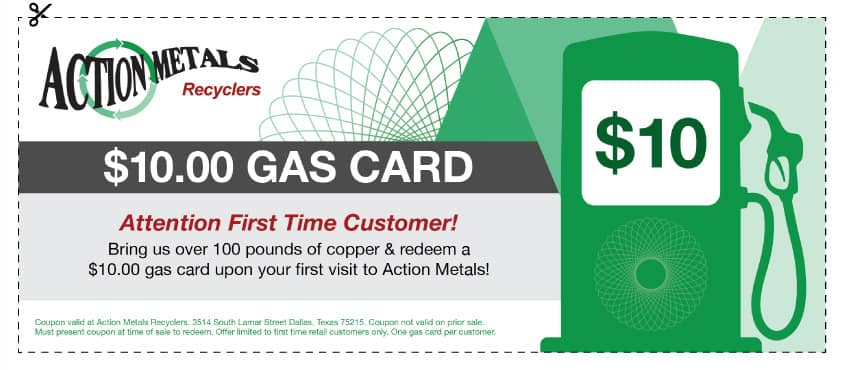
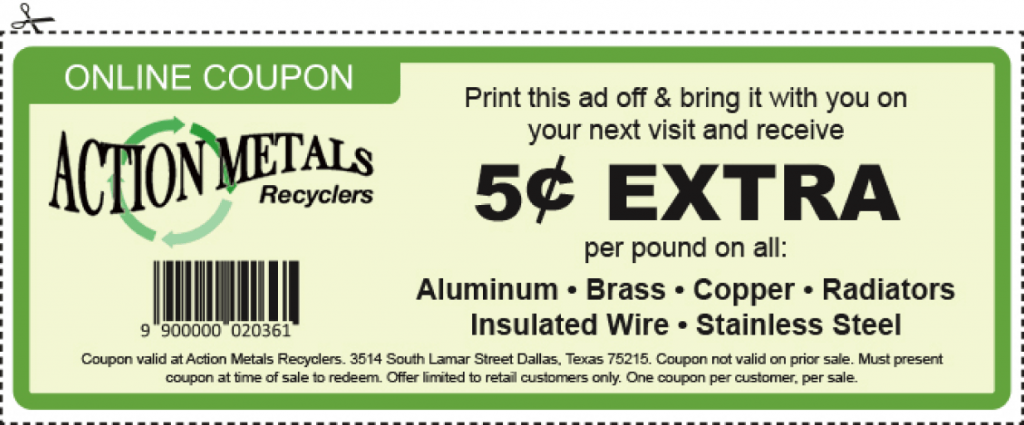
    At Action Metals Recyclers, we pay full price for the following metals:

    • Steel
    • Copper
    • Insulated Wire
    • Aluminum
    • Brass
    • Stainless Steel

    Look Around at Home

    You can find scrap anywhere, but one of the best places to start searching is at home. The chances are you have lots of scrap sitting around your home collecting dust.

    For example, if you’ve ever had a plumbing problem, the chances are, you have a copper pipe in your garage you’ve saved from the repair.

    Other valuable metals you can find around the help are:

    • Soda Cans
    • Door Handles
    • Bathroom Fixtures
    • Old Car Parts

    Research and Trade for the Best Price

    Different metals sell at different prices as the markets fluctuate. Collecting enough scrap metal to make a healthy profit requires some work. So, you want to make sure you always sell at the time when prices are highest.

    Ask your local scrap metal recycler what general prices are like, and make your decision to sell from there.

    Protect Your Metal While Storing

    If you plan on collecting enough scrap metal to fund your summer fun, you’re going to need a place to safely store it. Leaving ferrous metals out in the open exposes them to oxygen and rain; two elements that can lead to corrosion and ruined metals.

    You will get paid by the pound. So, if your metals are rusted, you’ll see a significantly reduced ROI on your efforts.

    We suggest storing metals indoors, in a low-moisture environment that keeps them as dry as possible.

    Learn How to Separate Your Metals

    Separating your metals helps you earn more cash for your collection. Even if you have a hard time finding the differences in your scrap, the experts at Action Metals Recyclers can ensure your metals are separated before they go through our recycling process.

    Make a Connection for Your Scraps With Action Metals Recyclers

    If you have a scrap metal collection you are ready to part ways with, let Action Metals Recyclers be your scrap metal recycling partner. We are dedicated to buying scrap metal at the highest prices in Dallas and can help you earn cash while you clear scrap out of your community.

    We can even come to you and collect your scrap at no cost. Reach out to us today to learn more about our services and schedule your next pick-up.